Tokyo: A Vivid History, A Breathtaking Now (Hamza Tarek 5A)
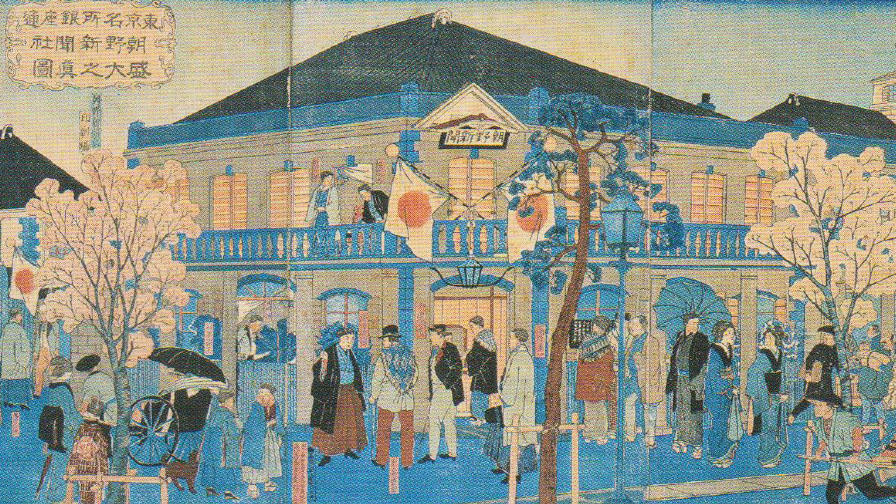
Tokyo, the capital of Japan, is one of the most advanced
cities worldwide. But before the future comes the past, and the traditions.
Tokyo’s history is one filled with trauma. Let’s go back to
1603 when Tokyo was originally founded as a fishing village, named Edo. That
year Edo became basically an official city since it became the seat of the
Tokugawa shogunate, simply the military government of Japan during the Edo
period, which was from 1603 to 1868. By the mid-18th century, Edo
was one of the most densely populated cities ever, by over 1 million. Then, in
1868, when the shogunate died, the imperial capital in Kyoto was moved to Edo,
which was renamed Tokyo. And now, Tokyo is ahead of the world by 7 centuries
based on the high technology, and that’s quite fascinating regarding the
catastrophes that occurred in Tokyo, starting with the Great Kanto earthquake in
1923, and the great depression, from 1930 till 1932, and lastly, the allied
bomb raiding during world war2(ww||). The bombing of Tokyo was a series of
firebombing, which is a bombing technique designed to damage and sabotage a
target through fire, air raids by the United States Army Air Forces (USAAF)
during ww||. This bombing raid is the single most destructive in human history.
Not only that, but 16 square miles (41 km², 10,000 acres) were devastated,
leaving an estimated 100,000 dead and over 1 million homeless. And those dead
bodies were charred to death, making it a horrific scene and burning the eyes of
those who’ve seen it. The casualties and losses were tremendous, leading to 43
aircraft being destroyed in addition to 267,171 buildings destructed, surely
resulting in America’s victory. On the other hand, even though Tokyo changed
most of its past, and rebuilt itself to another technology planet on Earth,
its traditions didn’t change. Most of the Japanese traditions are weird and
bizarre, including:
·
Not tipping at all, tipping
is considered an insult and can result to jail
·
Public sleeping, inemuri,
which translates to “being present while sleeping” or ”sleeping while being
present”
·
The sacred practice of
giving gifts, a rule is to never give gifts in sets of 4
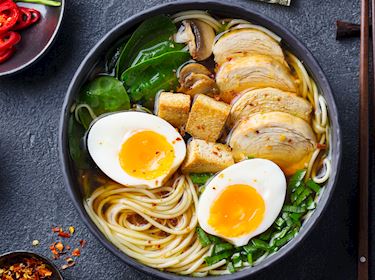
Furthermore, Tokyo has a set of traditional Japanese food, like Miso soup, a soup that warms every Japanese’s heart, or Sukiyaki, which is a dish made with several ingredients, like slim slices of beef, green onions, tomatoes, mushrooms, and tofu, cooked in a shallow iron pan. And Tempura, a dish involving a variety of ingredients ranging from vegetables to meat and then seafood, yet whichever ingredient you choose is covered in a batter, usually containing flour and egg. This dish is generally dipped in a special sauce called Tetsuyu, a sauce made of broth from kombu or dried bonito, mirin, and soy sauce. And to top it all off, last but not least, handmade ramen, a skill that takes 10 years to master, done by samurai-like chefs, who are stupendously skilled, and all chefs, each and every chef is unique, like sushi chefs have swords to cut their fish, and noodle chefs act like a ninja, sometimes punching their dough, launching it in the air and killing in front of the customer.

Tokyo’s scientists and inventors are one-of-a-kinds, since the food in the restaurants are delivered from the chef to the customer using a conveyor belt, and the plates are also delivered from the customer to the chef using the conveyor belt. Additionally, customers can play games on the conveyor belt! How interesting is that! Finally, to end this off, Tokyo is an amazing and futuristic city, with neon light covering the city, high-technology and wondrous people


Comments
Post a Comment